Whats Happening: The First Minutes After a Car Stops
Notes for the stretch between a car stopping on the road and help arriving, with each figure dated to the source it comes from.
Who these notes are for, and what they leave out
The next ten minutes after a car stops are often decided by what the driver does before anyone arrives. These notes are for the driver on the shoulder or in a car park who has not yet decided what help to ask for. They cover Massachusetts and New Hampshire, where notice, fines and dispute windows differ, so each figure names its state. For which truck or service fits, the helper on How We Help works through it one question at a time.
As Tow Times reported when several states were weighing Move Over bills, tow operators argued that enforcement at the time did not do enough to protect people working at the roadside. We keep that in mind whenever the question turns to how drivers should behave around a stopped truck.
That Tow Times article is dated 3 March 2019, so it describes the argument of that year, not today's law. The rules quoted here were checked in October 2026.
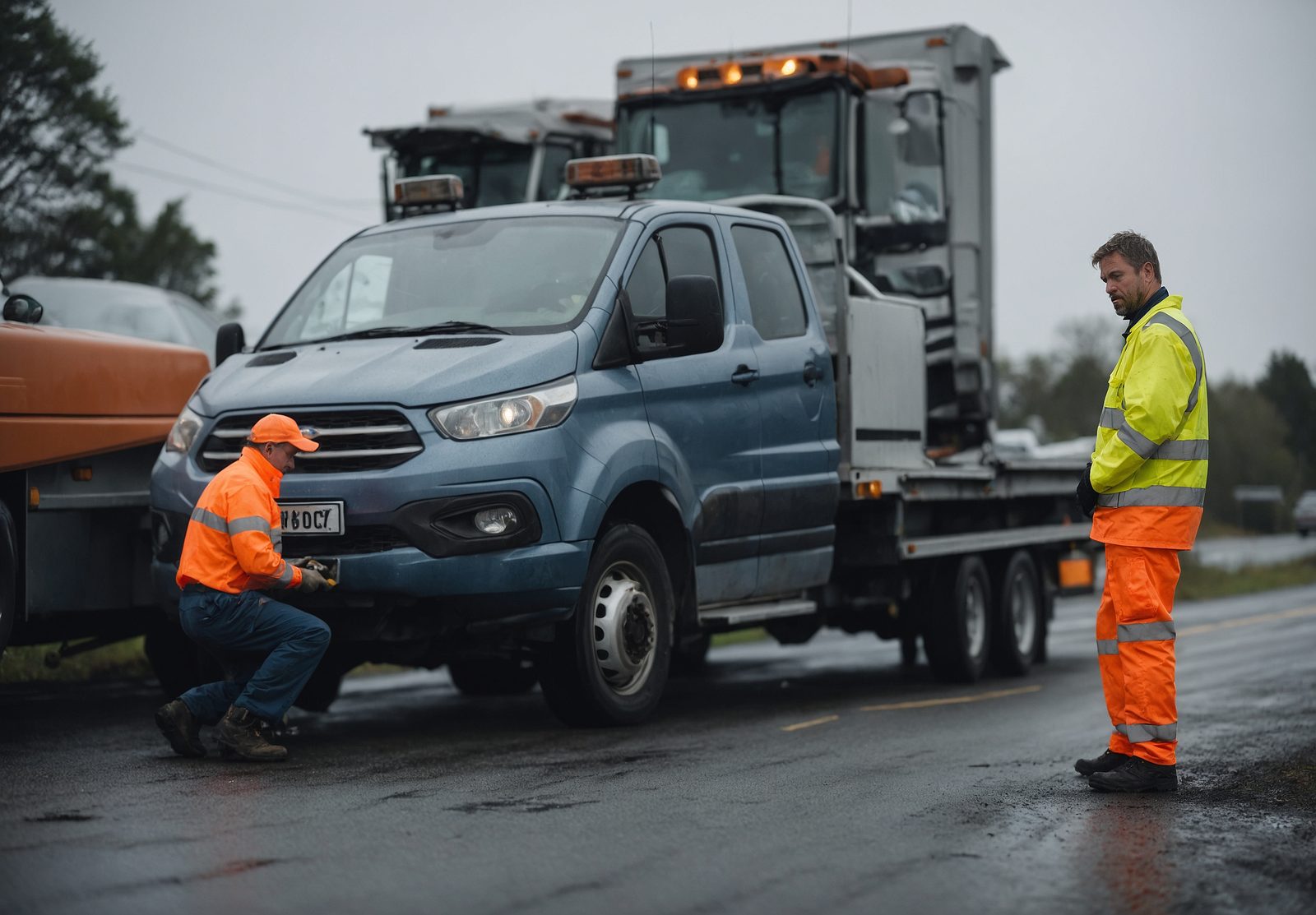
Move the car out of the lane before anything else
If the car can still roll, move it to the shoulder or a parking area well clear of the travel lanes. If it cannot, leave the hazard lights on, get passengers out on the side away from traffic, and wait behind a barrier where one exists. Note the nearest exit or mile marker for the call.
Working through the first half hour in order
Hazard lights on, then look at the lane
Switch the hazard lights on first, so drivers behind see the car early. Then check whether it can leave the lane under its own power.
Get people out on the side away from traffic
Passengers leave by the door away from the lane and stand behind a barrier if one is there. Nobody should stand between the car and traffic.
Record the scene before anything is moved
Note the road, the lane, the car's position and any damage, and photograph it from several angles. On private land, photograph any parking or towing sign, since the rules for a tow from a lot in both states look at whether parking was forbidden and notice posted.
Have the call details ready before dialling
Know the make, model and colour, the plate, the nearest cross street or mile marker, and whether the car blocks a lane. Say the drive type too: AAA's comparison of flatbed and wheel-lift towing lists a flatbed as the right truck for all-wheel and four-wheel drive vehicles.
What close work on a stopped car looks like
A short clip can show the work involved more clearly than a description. Treat it as background; the call is what moves a stopped car.
Four numbers to have in mind before the truck arrives
Each figure comes from the source linked beside it, checked in October 2026. Where a rule belongs to one state, the entry says so.
- 106
- Tow truck operators killed or severely injured in cases found in OSHA records, in a NIOSH-described study. The paper, Motor Vehicle Towing: An Analysis of Injuries in a High-Risk yet Understudied Industry, dates from 2019 and covers US data.
- $100
- The most a Massachusetts driver can be fined, as of October 2026, for failing to move over from a stopped tow or recovery vehicle with flashing lights, or to slow down when moving over is not practicable. See General Laws chapter 89, section 7C.
- $75
- The New Hampshire first-offence fine, plus penalty assessment, for passing a stopped vehicle with warning signals without slowing or giving a wide berth where practical. A repeat within 12 months is $250. As of October 2026, under RSA 265:37-a.
- 3 years
- The battery age past which AAA says a battery may not hold a charge overnight. AAA also says never to jump a cracked, bulging or rotten-egg-smelling battery. The guide is How to jump a battery and get yourself back on the road (AAA).

When the car is locked or the battery is flat
Neither is a roadside repair to attempt in traffic. If the keys are inside a locked car, say so on the call and describe where they sit. A flat battery is a different job: if it looks damaged, do not jump it at all. Which truck fits depends on drive type and weight, and the helper on How We Help works through both.
We write these notes to be read once, at the roadside, with one hand free.
That sentence is the test every note here has to pass.